AI Visibility Checker: How to Check Your Brand Free
A practical guide to checking whether your brand shows up in ChatGPT, Perplexity, and Gemini answers. Covers the free manual method, what the paid tools add, and how to read the results.

An AI visibility checker tells you whether ChatGPT, Perplexity, Gemini, Claude, and Google AI Overviews mention your brand when someone asks a buying-intent question in your category. You can check this free by manually prompting each engine with the questions your customers ask and recording whether you appear, a competitor appears, or nobody does. Monitoring tools automate that across engines and track it over time. The fastest way to get a full baseline is a free AI visibility audit, which prompts ChatGPT, Claude, Gemini, and Perplexity and scores where you stand.
What an AI Visibility Checker Actually Checks
An AI visibility checker answers one question: when a real person asks an AI engine for a recommendation in your category, does your brand come up? That is a different question from "do I rank on Google," and the answer is usually worse than owners expect.
The check has three possible outcomes for any given prompt. Your brand is recommended (named as a good option). Your brand is mentioned (listed among others, but not championed). Or your brand is absent while competitors get named. A proper checker records which of the three happened, on which engine, for which prompt.
Joel House, founder of Outrigger and author of AI for Revenue, puts it bluntly: "Most businesses have never actually asked ChatGPT the question their customers ask. They assume that because they rank on Google, they show up in AI answers. Those are separate retrieval systems. I have watched a company that ranks #1 organically get named zero times across twenty AI prompts. Until you run the check, you are guessing."
The scale of the problem is documented. A 2026 study from Outrigger (the Outrigger AI Visibility Index, v3, DOI 10.5281/zenodo.20076380) found that more than two-thirds of businesses (69.5% of 2,729, 95% CI 67.8–71.2%) are invisible in AI search across 2,729 businesses. An AI visibility checker is how you find out which side of that line you are on. If you suspect you already know the answer, the deeper diagnosis in why your brand is invisible to AI covers the causes.
The Free Manual Method (Do This First)
You do not need to buy anything to run a first check. You need a list of the questions your customers actually ask, and thirty minutes. Here is the process.
- Write 8-10 buying-intent prompts. Phrase them like a customer, not like a marketer. "Best commercial laundry equipment supplier in Australia," not "commercial laundry." "What CRM should a small law firm use?" not "legal CRM."
- Open each engine in a fresh session. Use ChatGPT, Perplexity, Gemini, and Google AI Overviews (search the query and read the AI-generated summary at the top). Log out or use a private window so your history does not personalize the answer.
- Paste each prompt and read the full answer. Record three things per prompt: was your brand named, which competitors were named, and did the engine cite any source URLs.
- Score it. Count how many of your prompts named your brand. If you appear in 2 of 10 on ChatGPT, that is a 20% mention rate on that engine. Do this per engine.
- Note the sources. When Perplexity cites URLs, look at what it is citing — Reddit threads, directories, review sites, competitor blogs. Those citations are the map of where AI is getting its answer, and where you are missing.
This manual pass gives you a real baseline. It is tedious, it does not track change over time, and it only captures one moment (AI answers vary run to run), but it is honest and it is free. The mechanics of ongoing tracking are covered in how to monitor what AI says about your brand.
Suppose a commercial laundry supplier runs this check. They write ten prompts like "best commercial laundry equipment supplier for a gym" and "who supplies coin-op laundry machines to apartment buildings." On ChatGPT they get named once out of ten. On Perplexity, zero out of ten, but Perplexity cites two industry directories and a Reddit thread in r/smallbusiness — and their two biggest competitors are in all three. On Google AI Overviews, four of the ten queries trigger an Overview and the supplier appears in none. That is not a vague worry anymore; it is a scored gap with a named target list. The directories and the Reddit thread are exactly where the off-page work needs to happen.
Run the manual check once yourself before you look at any tool. The moment ChatGPT recommends three of your competitors and skips you does more to focus a strategy than any dashboard — after that, automate it so you are not doing it by hand every week.
One caution: because answers vary run to run, a single pass over-indexes on luck. If you can, run each prompt two or three times and average. A brand that appears once in three runs is genuinely weaker than one that appears three times in three, even though a single check might rank them equal.
Free Checks vs Paid Tools: What You Get
The manual method is free but limited. Paid and freemium tools exist because AI answers are non-deterministic (they change per run), span five engines, and need tracking over time to show whether your work is moving the needle. Here is the honest trade-off.
| Capability | Free manual check | Free tool / audit | Paid tracking platform |
|---|---|---|---|
| One-time baseline | Yes (manual) | Yes (automated) | Yes |
| Covers all 5 engines | Only if you check each | Usually | Yes |
| Runs each prompt multiple times | No | Sometimes | Yes |
| Tracks change week over week | No | Rarely | Yes |
| Competitor share of model | Manual counting | Sometimes | Yes |
| Source-citation analysis | Manual | Sometimes | Yes |
| Tells you what to fix | No | Sometimes | Yes (better tools) |
A free one-time audit is the sweet spot for most people running their first real check: it prompts OpenAI, Perplexity, Gemini, Anthropic Claude, and Google AI Overviews (provisional), counts mentions, and gives you a baseline score without a manual afternoon. A free AI visibility audit does exactly this and returns where your brand stands across the AI engines plus the gaps a competitor is filling that you are not.
Paid tracking platforms earn their keep once you are actively working on visibility and need to prove movement. The full comparison of AI visibility tools breaks down which platforms suit tracking versus fixing. If you specifically care about Google's AI answers, the AI Overviews trackers guide is narrower and more useful.
How to Read Your Results (What the Numbers Mean)
A checker gives you numbers. The numbers only matter if you know what an acceptable score looks like and what a bad one is telling you to do.
Mention rate near zero across all engines. You have an authority and citation problem, not a tuning problem. AI models have nothing to retrieve about you from the sources they trust. The fix is off-page: brand mentions in the threads, directories, and review sites AI already cites. This is the most common finding, and it maps to the brand-not-appearing fix.
Mentioned but never recommended. AI knows you exist but does not champion you. This is a consensus problem — not enough independent sources say you are good. More reviews, more third-party mentions, more consistent entity data.
Strong on one engine, invisible on others. Retrieval differs by engine. Perplexity leans on live web citations; ChatGPT leans on training data plus browsing; Google AI Overviews leans on its own index. A gap on one engine usually points at a source type that engine favors and you are missing.
Competitors dominate your source citations. When Perplexity keeps citing the same Reddit thread or directory and your competitor is in it and you are not, that thread is a specific, nameable target. This is the most actionable output of the whole check.
The raw signal that moves these numbers is not what most owners guess. Ahrefs' study of 75,000 brands found branded web mentions (r=0.664) have roughly 3x the correlation of backlinks (r=0.218) with visibility in Google's AI Overviews, and Outrigger's study found directory presence and entity consistency are among the strongest raw predictors. So a low score is rarely fixed by more backlinks — it is fixed by more mentions and cleaner entity data. What Outrigger's features automate is exactly that loop: check across five engines, find the source gaps, and seed the off-page mentions that close them.
From Check to Fix: Your Next Move
A checker is a diagnosis, not a treatment. The value is in what you do with the result. Here is the sequence that turns a bad score into a better one.
- Baseline properly. Run the manual check or a free audit so you have real numbers per engine, not a hunch.
- Find your source gaps. Look at what AI cites when it answers your category questions. Those citations are your target list.
- Fix entity consistency first. Make sure your business is described the same way everywhere AI looks — directories, LinkedIn, your site's schema. It is the highest-leverage, lowest-effort fix.
- Seed the sources AI already trusts. Get genuine, helpful brand mentions into the high-authority threads and directories that show up in your citation analysis.
- Re-check monthly. AI visibility moves. Track it so you know what is working.
One mistake to avoid at this stage: treating the checker's score as the finish line. The score is a thermometer, not a treatment. Some owners run a check, feel alarmed, run it again a week later hoping the number moved, and mistake the variance between two runs for progress or decline. Neither is real. The number moves when the underlying signals move — when a new directory listing goes live, when reviews accumulate, when a genuine mention lands in a thread the engines cite. Check to diagnose and to confirm the trend over a month; do the actual work in between. A dashboard refreshed daily changes nothing if nothing off-page is changing.
AI referral traffic is worth chasing for a concrete reason: the Outrigger study found it converts roughly 4.4x better than traditional organic traffic, because someone who arrives on an AI recommendation arrives pre-sold. Getting recommended is not a vanity metric.
Start with the baseline. A free AI visibility audit prompts ChatGPT, Perplexity, Gemini and Claude, then reports the verified signals available for your brand and recommended next moves. For the wider tooling picture, the sibling guides on the best AI Overviews trackers and ChatGPT SEO tools go engine by engine.
Frequently Asked Questions
Is there a free AI visibility checker?
Yes. The fully free option is the manual method: prompt ChatGPT, Perplexity, Gemini, and Google AI Overviews with your customers' buying-intent questions and record whether your brand appears. Several tools also offer a free one-time audit. Outrigger's free audit checks ChatGPT, Perplexity, Gemini and Claude, and displays an official baseline only when the evidence is verified.
How do I check if my brand appears in ChatGPT?
Open ChatGPT in a logged-out or private session so history does not personalize the answer, then ask it the exact questions your customers ask — for example "what are the best options for [your category]?" Read the full answer and note whether you are named, which competitors are named, and whether any sources are cited. Repeat with several prompts to get a mention rate rather than a single data point, since AI answers vary run to run.
Why doesn't my brand show up in AI answers even though I rank on Google?
Google ranking and AI visibility are separate retrieval systems. AI engines pull from a mix of training data, live citations, and their own index, weighting brand mentions, reviews, and entity consistency far more than a single ranking page. Ahrefs' study of 75,000 brands found branded web mentions (r=0.664) have roughly 3x the correlation of backlinks (r=0.218) with visibility in Google's AI Overviews, which is why a #1 organic ranking can still map to zero AI mentions.
How often should I check my AI visibility?
Run a full baseline once, then re-check monthly while you are actively working on visibility. AI answers shift as models update and as new sources get indexed, so a single check is a snapshot, not a trend. Monthly re-checks let you see whether your entity fixes, reviews, and citation work are actually moving your mention rate across the engines.
Review Your AI Visibility Baseline
The free quick audit covers three core signal groups: Citations, AI Presence, and On-Page foundations. Review available findings and recommendations supported by the evidence the audit could verify.
Analyze your brandRelated Articles
How to Monitor What AI Models Say About Your Brand
Your Brand Is Invisible to AI — Here’s How to Check in 60 Seconds
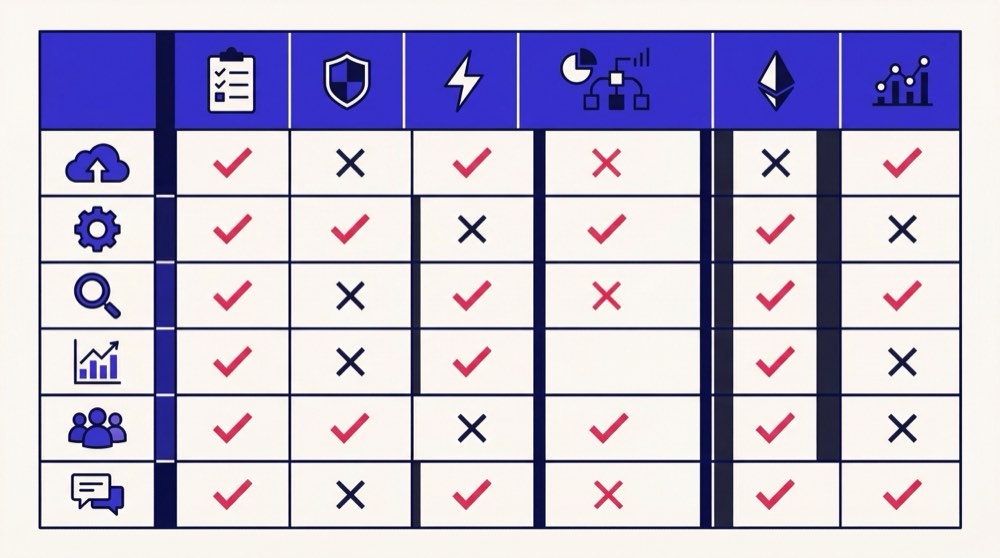
AI Visibility Tools Compared: How to Choose the Right Platform in 2026
Why Your Brand Doesn\'t Appear in AI Search Results (and How to Fix It)