How AI Overviews Killed CTR by 61% (and What to Do About It)
Google AI Overviews have slashed organic click-through rates by 61% for queries where they appear. This data analysis covers the scale of the impact, which industries are hit hardest, and the strategic pivot brands must make to maintain search-driven revenue.

Google AI Overviews reduce organic click-through rates by 61% for queries where they appear. Combined with the broader zero-click trend (60-83% of searches), this means brands relying solely on traditional organic rankings are losing the majority of their potential traffic. The strategic response: optimize to be cited WITHIN AI Overviews rather than competing below them.
The 61% CTR Drop: What the Data Shows
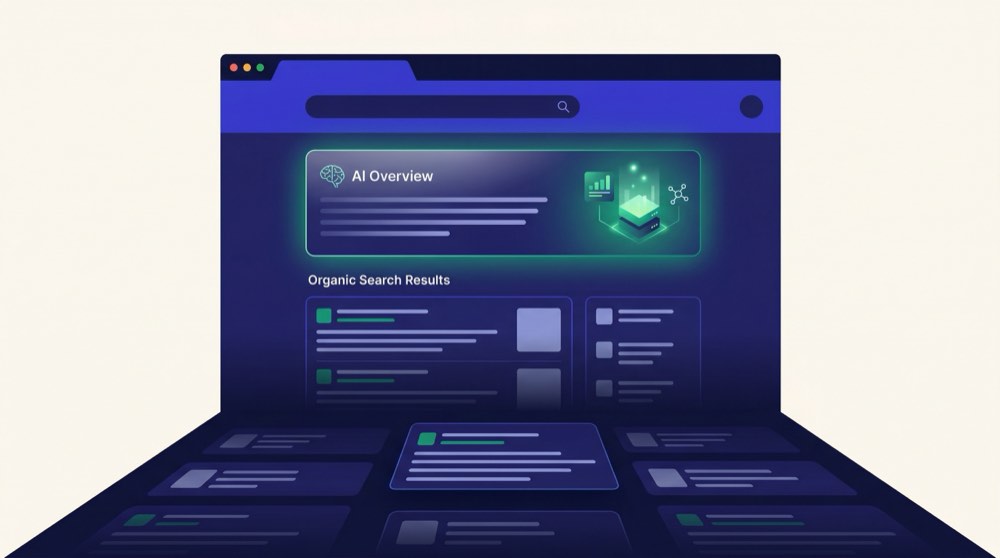
AI Overviews slash organic CTR by 61% for queries where they appear. This is not a marginal erosion — it is a structural collapse in the click-through model that has powered organic search marketing for two decades.
The broader context makes this even more urgent. 60-83% of searches already end with zero clicks — and when AI Overviews are present, the zero-click rate approaches the higher end. Combined with 37% of consumers now starting searches with AI tools instead of Google, the traditional organic ranking playbook is losing effectiveness faster than most brands realize.
Which Industries and Query Types Are Hit Hardest
AI Overviews do not appear for every query — but when they do, the CTR impact is severe. The categories most affected:
Informational queries (hardest hit): "What is [topic]?" "How does [thing] work?" "Define [term]." These queries are fully answered within AI Overviews, leaving zero reason to click through to the source. Brands that relied on informational content to drive top-of-funnel traffic are seeing dramatic drops.
Commercial comparison queries (heavily affected): "Best [product] for [use case]" "[Product A] vs [Product B]" — AI Overviews synthesize recommendations, often citing sources but reducing the need to visit individual review sites. This impacts SaaS comparison sites, review platforms, and brand comparison pages.
Local queries (moderately affected): "Best [service] near me" — AI Overviews increasingly provide local recommendations with ratings and links. The impact is moderate because users still need to visit the business or make a call.
Navigational queries (least affected): "[Brand name] login" "[Brand name] pricing" — these queries still drive clicks because the user intends to visit a specific site.
| Query Type | AI Overview Frequency | CTR Impact | Strategic Response |
|---|---|---|---|
| Informational ("what is") | Very high | Severe (70%+ CTR loss) | Optimize for citation within the Overview |
| Commercial ("best X") | High | Significant (50-60% loss) | Comparison content + FAQ schema |
| Local ("near me") | Moderate | Moderate (30-40% loss) | Google Business Profile optimization |
| Navigational (brand) | Low | Minimal | Maintain brand search equity |
The Strategic Pivot: From Ranking Below to Cited Within
The strategic response to AI Overviews is not to fight them — it is to be cited within them. Being a source that AI Overviews reference and attribute is more valuable than ranking #1 in the organic results below.
Why citation within AI Overviews matters more: - Users read the AI Overview first — your brand mention reaches them before they scroll - Cited sources get a branded link within the Overview, driving pre-qualified traffic - AI referral traffic converts at 4.4x the rate of organic traffic - Being cited in AI Overviews signals Google that your content is authoritative
How to get cited in AI Overviews: 1. FAQ schema: Pages with FAQPage schema provide explicit question-answer pairs for AI Overviews. Implement on every page with Q&A content. 2. Structured sections: Break every article into 120-180 word self-contained sections. 3. Statistics and data: Adding statistics improves visibility by 40.9%. AI Overviews preferentially cite data-backed claims. 4. Expert attribution: Named expert quotes improve citations by 28%. AI Overviews attribute cited content to named sources. 5. Topical authority: Comprehensive topic coverage makes your site a preferred citation source across multiple related queries.
The Dual-Channel Strategy: Google Rankings + AI Citations
The optimal strategy in 2026 is not choosing between traditional SEO and GEO — it is running both in parallel.
Traditional SEO still matters because: - Google organic search still drives the majority of search traffic for most businesses - Not all queries trigger AI Overviews - High organic rankings increase AI retrieval probability (AI models often use Google\'s index) - Backlinks still build domain authority that supports AI visibility indirectly
GEO is now essential because: - AI Overviews are expanding to more query types - 37% of consumers start with AI tools, bypassing Google entirely - AI referral traffic converts at 4.4x the rate of organic - Ahrefs' study of 75,000 brands found branded web mentions (r=0.664) have roughly 3x the correlation of backlinks (r=0.218) with visibility in Google\'s AI Overviews - The AI search channel is growing at 527% year-over-year
The practical allocation: Maintain your traditional SEO foundation (technical health, content, backlinks) while adding GEO activities: content seeding, AI-optimized content structure, schema markup, and multi-source consensus building.
The AI visibility audit measures your position across both channels, identifying where to invest for maximum combined ROI. The 90-day playbook sequences both traditional and AI optimization activities in parallel. Outrigger provides the monitoring infrastructure to track both channels from a single dashboard.
Wondering whether AI Overviews are citing you or your competitors? The free AI Visibility Audit measures whether you get cited within AI answers across all six pillars — AI Presence, Entities, Reviews, On-Page, Citations, and Press — and emails your scored report in several minutes.
Frequently Asked Questions
Are AI Overviews appearing for all search queries?
No. AI Overviews currently appear for a subset of queries, primarily informational and commercial comparison queries. Google is expanding coverage gradually. Navigational queries (brand searches) and some transactional queries rarely trigger AI Overviews. The trend is toward broader coverage, so optimizing for AI citation now prepares you for increased AI Overview presence.
Can I opt out of AI Overviews citing my content?
Technically yes — you can use robots.txt directives to block Google\'s AI training crawlers. However, this also blocks the positive visibility of being cited in AI Overviews. For most brands, being cited is significantly more valuable than the traffic lost to zero-click answers. The robots.txt strategy guide covers this trade-off in detail.
Does ranking #1 on Google still help if AI Overviews push results down?
Yes, for two reasons. First, not all queries trigger AI Overviews, so ranking #1 still drives traffic for those queries. Second, pages that rank #1 are more likely to be cited within AI Overviews because Google uses its own ranking signals to select citation sources. Organic ranking and AI citation are complementary, not competing.
How do I track whether AI Overviews are affecting my traffic?
Compare Google Search Console data year-over-year for specific queries. If impressions remain stable but clicks decline for informational and commercial queries, AI Overviews are likely the cause. Also monitor the AI referral traffic segment in your analytics — growing AI referrals may partially offset declining organic clicks. Track both metrics together to understand the net impact.
Review Your AI Visibility Baseline
The free quick audit covers three core signal groups: Citations, AI Presence, and On-Page foundations. Review available findings and recommendations supported by the evidence the audit could verify.
Analyze your brandRelated Articles
Zero-Click Search Is Here: What the AI Overviews Data Actually Shows
AI SEO vs Traditional SEO: What Changed and What Didn’t in 2026
What Is Generative Engine Optimization (GEO)? The Complete Guide for 2026
AI Search Traffic Converts 4.4x Better: Here\'s the Data