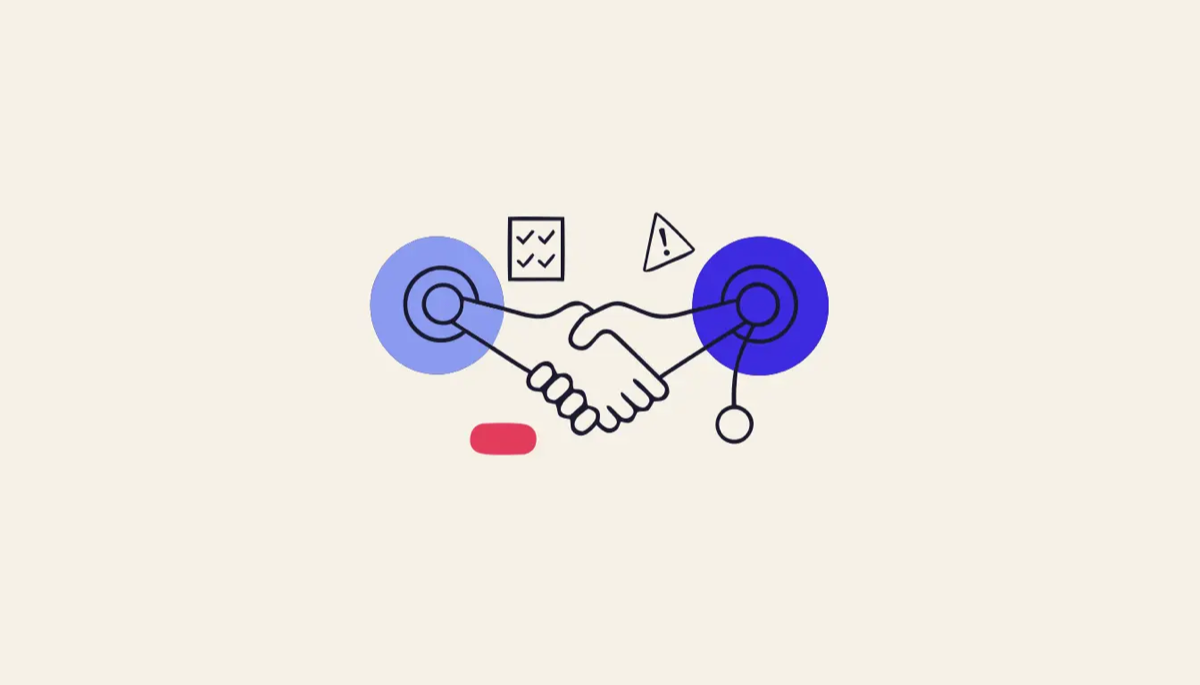
How to Hire a GEO Consultant (Questions + Red Flags)
What a GEO consultant or agency should actually do for you, the questions to ask before you sign, and the red flags — guaranteed #1 in ChatGPT, fabricated metrics — that signal you're about to waste money.

A good GEO consultant runs a five-pillar audit, sets a measurable baseline (your share of model today), and executes across entities, citations, reviews, and citable content — then reports movement monthly. Ask them how they measure results, what they'll actually do in the first 90 days, and to show a real before-and-after. Walk away from anyone who guarantees a #1 spot in ChatGPT (impossible — AI answers are non-deterministic), quotes vanity metrics with no connection to recommendations, or can't explain how AI models choose brands. The right hire proves visibility with data; the wrong one sells a badge.
What a GEO Consultant Should Actually Do
Before you can judge a GEO consultant, you need to know what the job actually is. A competent GEO consultant makes your brand visible to AI models — ChatGPT, Perplexity, Gemini, and Google AI Overviews — so you get recommended when buyers ask for options in your category. That is the whole point, and every deliverable should ladder up to it.
Concretely, a good consultant or agency will:
- Run a baseline audit across the five pillars of AI visibility — AI presence, entities, citations, reviews, and on-page structure. Without a baseline, there is no way to prove they moved anything. The GEO audit process is what this should look like.
- Set a measurable target. Usually your share of model — how often you appear when the models are asked your category's buying-intent questions. This is the number the engagement is judged on.
- Execute across the pillars that matter for you. Fixing entity inconsistencies, seeding citations where competitors appear and you don't, closing review gaps, and restructuring your pages for citability.
- Report movement monthly with before-and-after data, not activity logs.
The tell of a real GEO consultant is that they lead with measurement. They'll show you where you stand today across the models before they pitch you anything, because the only way to prove they earned their fee is to move a number you can both see. The ones who lead with vibes and "AI is the future" and never mention how they'll measure it are the ones to be nervous about.
The stakes are real: a 2026 study from Outrigger found 65.9% of businesses are effectively invisible in AI search. A good consultant moves you out of that majority. A bad one takes your money while you stay invisible.
The Questions to Ask Before You Sign
Treat the first conversation like an audition. The right questions surface competence fast. Ask all of these.
- "How do you measure AI visibility, and how will you show me progress?" The answer should include share of model tracked across multiple models over time, plus audit re-runs. If they can't describe a measurement method, they can't prove results.
- "Walk me through what you'd do in the first 90 days." You want a concrete sequence — audit, entity fixes, citation seeding, review work — not "we'll create great content." Vagueness here means they don't have a repeatable process.
- "Can you show me a real before-and-after?" A genuine practitioner can show a brand's share of model rising over a defined period. Be specific: ask what the number was, what they did, and what it became.
- "How do AI models actually decide which brands to recommend?" This is a competence test. A real consultant can explain retrieval, entity trust, and third-party citations in plain language. Someone who deflects to jargon doesn't understand the mechanics.
- "What do you need from me, and what stays my responsibility?" Good consultants are clear about the division of labor — which work they execute and which requires your input (review generation, approvals, brand facts).
- "How do you handle the things you can't directly control?" AI answers are non-deterministic and the models update constantly. An honest consultant acknowledges this and explains how they work with it, rather than pretending to control it.
For agencies evaluating whether to build this capability in-house versus hiring out, the GEO for agencies guide covers the operational side. And if you want to sanity-check any consultant's audit against your own, run the five-pillar audit yourself first — walking in with your own baseline changes the entire conversation.
Red Flags That Mean Walk Away
Some signals are disqualifying. If you see any of these, end the conversation — they indicate either incompetence or dishonesty, and both cost you money.
| Red flag | Why it disqualifies |
|---|---|
| "Guaranteed #1 in ChatGPT" | AI answers are non-deterministic — no one can guarantee a fixed position. This is a lie by definition. |
| Vanity metrics with no link to recommendations | "Impressions" and "AI mentions" that don't map to being recommended for buying-intent queries are theater. |
| Can't explain how models choose brands | If they don't understand retrieval, they're guessing with your budget. |
| No baseline audit before pitching | Without a before, they can never prove an after. |
| Fabricated or unverifiable case studies | Ask for specifics. Vague "we 10x'd their AI traffic" with no method is a fabrication signal. |
| Secret proprietary method they won't explain | Real GEO mechanics are knowable. "Trade secret" usually means "nothing." |
| Charges for guaranteed rankings | You're paying for something impossible to deliver. |
The most common — and most damaging — red flag is the guaranteed AI ranking. As Joel House warns, "Anyone who guarantees you the top spot in an AI model is either lying or doesn't understand the technology. The models generate answers fresh each time and change their retrieval sources constantly. You can dramatically improve the probability that you get recommended, and a good consultant will show you that probability rising. But guaranteeing a fixed rank is like guaranteeing a specific wave will hit the beach at 3:47 PM. It's not how any of this works."
The second most common is fabricated metrics. Proof honesty matters. Ask any consultant to show the actual method behind a claimed result. If they can't produce a baseline, a set of actions, and a measured outcome, treat the case study as fiction. The ROI of AI visibility guide covers what honest, real numbers actually look like.
A quieter red flag worth naming: consultants who won't say which models they're optimizing for. AI visibility is not monolithic. ChatGPT, Perplexity, Gemini, and Google AI Overviews retrieve from different sources and reward different signals, and a real practitioner will talk specifically about which engines matter for your buyers and how their approach differs across them. Someone who only ever says "AI" as one undifferentiated blob usually hasn't done the work of testing across the models. Ask them to name the engines they track and describe how their tactics change between a Perplexity-heavy audience and a ChatGPT-heavy one. The answer separates operators from opportunists fast.
Consultant, Agency, or Software: Which Fits You
"Hire a GEO consultant" is one of three paths, and the right one depends on your resources and how much you want to own.
A solo consultant fits when you need strategy and direction more than execution hands. They audit, set the plan, and guide your team to do the work. Best for businesses with an existing marketing person who can execute, or for a defined project like an initial audit and roadmap.
An agency fits when you want the work done for you end to end. Agencies bring a team across the pillars — someone on entities, someone on citation seeding, someone on content. Best for businesses without internal marketing capacity who want to hand off the whole function. The trade-off is cost and less direct control.
Software fits when you want to run GEO in-house with structure. A platform gives you the audit, the measurement, and the workflow to execute yourself. Best for teams who want to own the capability and keep costs predictable rather than pay for hours. This is the path a growing number of businesses take once they understand the mechanics.
Budget is the other axis. A consultant's retainer buys judgment; an agency's fee buys hands; software buys infrastructure. If your team has time but no map, buy judgment. If it has neither, buy hands. If it has both and wants to keep the capability in-house, buy infrastructure and let the expertise compound inside your own business. Whichever you buy, insist that the measurement layer is yours — the baseline, the prompt set, and the monthly numbers should live somewhere you keep if the engagement ends.
Many businesses combine them — a consultant to set strategy, software to measure and execute, or an agency using software behind the scenes. What matters is that whoever runs your GEO can show you movement in a real number. Outrigger's pricing lays out the options for running it yourself or with support, and its features show what an execution-and-measurement platform actually does. The 90-day playbook is the plan any of the three should be working toward.
Whichever path you pick, start from data. A free AI visibility audit gives you your current share of model and a prioritized gap list before you spend a dollar on any consultant — which means you can judge every pitch against a baseline you already control instead of taking their word for where you stand.
Frequently Asked Questions
How much does a GEO consultant cost in 2026?
Pricing varies widely because the field is young and unstandardized. Solo consultants often charge project fees for an audit and roadmap or monthly retainers for ongoing work; full-service agencies charge more because they execute end to end; software platforms offer predictable monthly pricing for teams running GEO in-house. Rather than anchoring on a number, judge cost against measurable outcomes — what share-of-model movement are you paying for, and how will it be proven?
Can a GEO consultant guarantee I'll rank #1 in ChatGPT?
No, and anyone who claims they can is a red flag. AI models generate answers non-deterministically and update their retrieval sources constantly, so no fixed position can be guaranteed. What a competent consultant can do is significantly raise the probability that you're recommended for your category's buying-intent queries — and show that probability rising over time through share-of-model tracking. Guaranteed rankings are a sales lie, not a deliverable.
What deliverables should I expect from a GEO consultant?
Expect a baseline five-pillar audit, a defined target metric (usually share of model), a 90-day execution plan across entities, citations, reviews, and on-page structure, and monthly reports showing before-and-after movement. You should also get clarity on the division of labor — what they execute versus what needs your input. If the deliverables are activity logs with no connection to whether you're being recommended, the engagement is missing the point.
Should I hire a GEO consultant or use GEO software?
It depends on whether you want the work done for you or want to own the capability. A consultant or agency fits when you lack internal capacity and want to hand off execution. Software fits when you have a team that can execute and you want structured measurement plus predictable costs. Many businesses combine both — a consultant for strategy and software to measure and run the work. Start by auditing your own baseline so you can judge either option against real data.
AI audits are currently invite-only
Outrigger is in an invite-only pilot. Existing invited users can sign in for audit access; public access is not open.
Pilot accessRelated Articles

GEO for Agencies: How to Add AI Visibility to Your Service Offering
How to Run a GEO Audit (Step-by-Step Process)

Best GEO Courses & Certifications in 2026

The ROI of AI Visibility: How to Calculate and Prove Value