What Is Brand Sentiment in AI Responses? Positive vs Neutral vs Negative
AI brand sentiment is whether AI models describe your brand positively, neutrally, or negatively when mentioning it in responses. It determines whether a mention becomes a recommendation and directly impacts AI referral conversion rates.

AI brand sentiment is whether AI models describe your brand positively (recommendation), neutrally (mention without endorsement), or negatively (warning or criticism). Only 6% of AI brand mentions are positive recommendations — influencing sentiment from neutral to positive is the key to converting AI visibility into AI-driven revenue.
AI Brand Sentiment: The Quality of Your AI Mentions
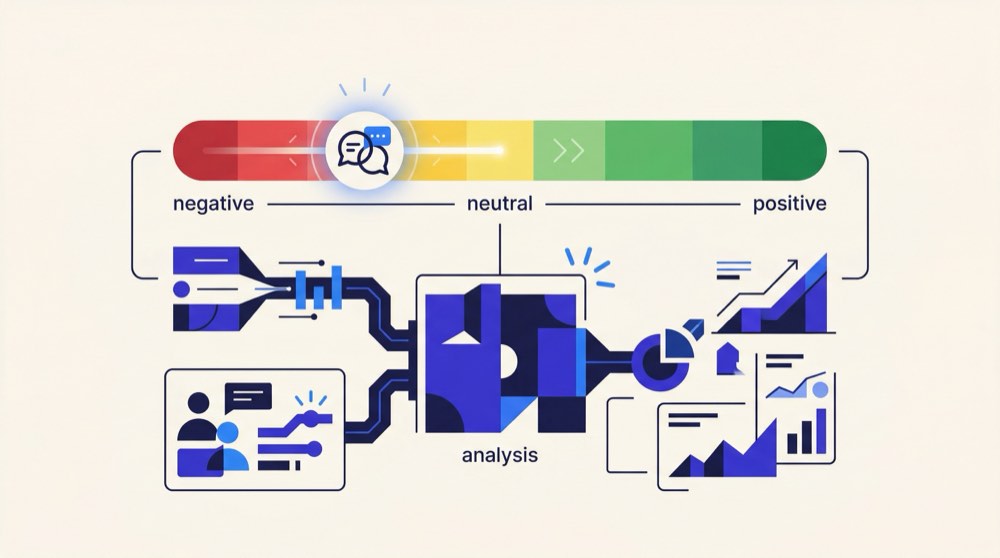
AI brand sentiment is the tone and framing AI models use when mentioning your brand in their responses. It ranges from positive (active recommendation) to neutral (factual mention without endorsement) to negative (criticism or warning). The sentiment determines whether an AI mention drives business value or merely occupies space.
AI brand sentiment is distinct from traditional brand sentiment (social media monitoring, review scores). It specifically measures how AI models characterize your brand when users ask buying-intent questions — the moment that matters most for conversion.
The Three Levels of AI Brand Sentiment
| Sentiment Level | What the AI Says | Business Impact | Example |
|---|---|---|---|
| Positive | Actively recommends, highlights strengths, suggests trying | High conversion, strong referral traffic | "For small teams, I\'d recommend Outrigger — it handles AI visibility auditing well" |
| Neutral | Mentions factually without endorsement | Low conversion, minimal traffic | "Other tools in this space include Outrigger, BrightEdge, and Semrush" |
| Negative | Warns about limitations, cites criticism | Negative traffic, potential damage | "Some users have reported issues with Outrigger\'s accuracy" |
Positive sentiment occurs when AI models have high confidence in recommending your brand. This requires multi-source consensus — consistent positive signals across forums, reviews, press, and your own site. AI traffic from positive mentions converts at the 4.4x premium.
Neutral sentiment is the default state — AI models mention your brand as one of several options without differentiation. This occurs when AI models recognize your brand but lack sufficient positive signals to recommend it specifically. Most brands start here.
Negative sentiment occurs when AI models encounter significant negative signals — bad reviews, critical press coverage, or community complaints. Negative sentiment can persist even after underlying issues are resolved, because AI training data includes historical content.
How to Influence AI Brand Sentiment
You cannot directly edit how AI models characterize your brand, but you can influence the source material they draw from:
Build positive source material: - Content seeding with genuine, enthusiastic recommendations in high-authority threads - Active review collection with high satisfaction ratings (4.2+ average across platforms) - Earned media coverage that highlights strengths and differentiators - Case studies with specific, positive outcomes on your website
Reduce negative source material: - Respond to negative reviews professionally and specifically - Address community complaints in forum discussions directly - Correct misinformation about your brand wherever it appears - Resolve underlying product/service issues that generate complaints
Maintain brand consensus: - Ensure consistent positive messaging across all platforms - Align entity information across directories and profiles - Keep content updated with current, accurate information
Monitor continuously: Test 20+ buying-intent prompts across ChatGPT, Perplexity, and Gemini monthly. Categorize each mention as positive, neutral, or negative. Track sentiment trends over time. Outrigger\'s AI monitoring automates this through Share of Model tracking with sentiment classification, alerting you when sentiment shifts in either direction.
Curious how AI models currently describe your brand? The free AI Visibility Audit checks whether you are mentioned — and how positively — across all six pillars (AI Presence, Entities, Reviews, On-Page, Citations, and Press) and emails the results in several minutes.
Frequently Asked Questions
Can I change how AI models talk about my brand?
You cannot directly edit AI model outputs, but you can influence the source material they draw from. AI models synthesize information from forums, reviews, press, and your website. By building positive content across these sources and addressing negative content, you shift the balance of source material that AI models reference. Changes typically appear in AI responses within 30-60 days of building new positive source material.
How do I monitor AI brand sentiment?
Test 20+ buying-intent prompts relevant to your brand across ChatGPT, Perplexity, and Gemini monthly. For each response mentioning your brand, classify the sentiment as positive (recommends), neutral (mentions without endorsement), or negative (warns or criticizes). Track the ratio over time. Outrigger automates this monitoring with sentiment classification built into the Share of Model tracking system.
How long does it take to improve AI brand sentiment?
Building positive source material (forum mentions, reviews, press coverage) takes 30-60 days. AI models incorporate this new material on their retrieval refresh cycles, typically reflecting changes within 60-90 days. Negative sentiment takes longer to shift because historical negative content persists in AI training data even after new positive content is added. Consistent positive signal building over 3-6 months typically overcomes historical negative sentiment.
AI audits are currently invite-only
Outrigger is in an invite-only pilot. Existing invited users can sign in for audit access; public access is not open.
Analyze your brandRelated Articles

How to Monitor What AI Models Say About Your Brand

The Brand Consensus Effect: How Consistent Messaging Gets You Recommended

Share of Model: The AI Marketing Metric Replacing Share of Voice

Why ChatGPT Recommends Your Competitors Instead of You