
What Is Entity Authority? Why AI Models Trust Some Brands More
Entity authority is the measurable trust and recognition that a brand, person, or organization has in search engines\' and AI models\' knowledge systems. It is built through consistent identity signals, knowledge graph presence, and multi-source validation.

Entity authority is the level of trust and recognition a brand holds in search engines\' and AI models\' knowledge systems. It is determined by knowledge graph presence, identity consistency across platforms, third-party validation, and structured data completeness. Brands with strong entity authority get cited by AI models because the AI system recognizes them as legitimate, verified entities.
Entity Authority: The Trust Layer Behind AI Citations
Entity authority is the degree to which search engines and AI models recognize, trust, and confidently reference your brand as a distinct, verified entity. It is not a score you can look up — it is an aggregate of identity signals that determine whether AI models treat your brand as a known, trustworthy entity or an unknown one.
The concept is analogous to personal identity verification. A person with a passport, driver\'s license, utility bills, and bank accounts at the same address is easily verified. A person with inconsistent names across documents, no fixed address, and no institutional records is difficult to verify. AI models apply the same identity verification logic to brands.
The Signals That Build Entity Authority
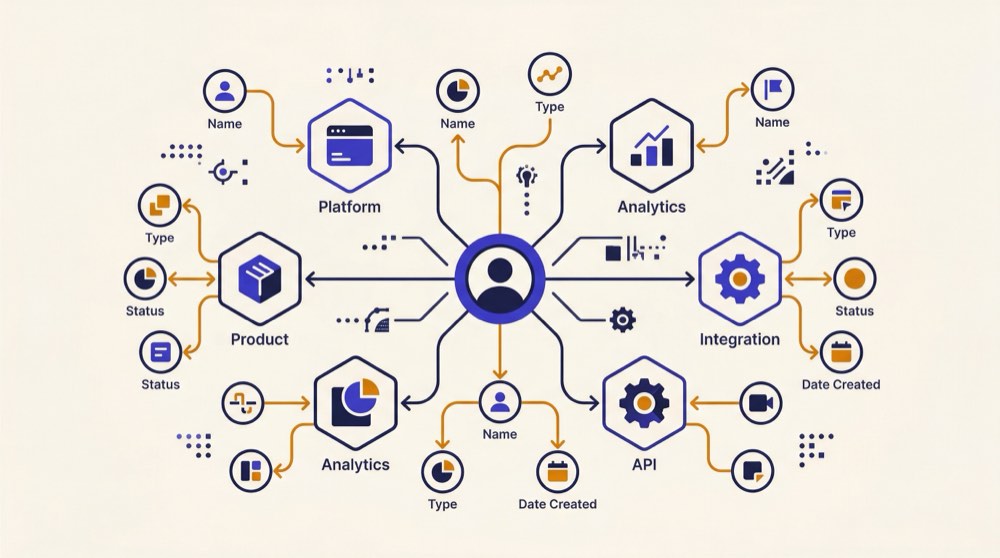
Entity authority is built through five categories of signals:
| Signal Category | Examples | Impact |
|---|---|---|
| Knowledge graph presence | Wikipedia, Wikidata, Google Knowledge Panel | Highest — confirms entity is "known" |
| Identity consistency | Same name, description, contact info across all platforms | High — inconsistency erodes trust |
| Structured data | Organization, Person, Product schema with sameAs links | High — makes entity machine-readable |
| Platform presence | LinkedIn, Crunchbase, Google Business Profile, industry directories | Medium-high — breadth of presence |
| Third-party references | Press mentions, review sites, forum discussions | Medium-high — external validation |
Knowledge graph presence is the strongest single signal. When your brand has a Wikipedia article, Wikidata entry, or Google Knowledge Panel, AI models have a verified reference point for your entity. Wikipedia accounts for 47.9% of ChatGPT\'s top-10 citations — knowledge graph entities get preferential citation treatment.
Identity consistency is the most commonly broken signal. Brands that use different names, descriptions, or founding dates across LinkedIn, Google Business Profile, Crunchbase, and their own website create entity confusion. AI models processing multiple inconsistent references may fail to consolidate them into a single trusted entity.
For the complete technical guide to building entity authority, see Entity SEO and Knowledge Graphs. For the broader E-E-A-T context, entity authority maps primarily to the Authority and Trust components.
Strengthening Your Entity Authority
Step 1: Audit entity consistency. Search for your brand name on Google and review every result on the first two pages. Note inconsistencies in name, description, category, contact information, or founding date. Fix every inconsistency — this is typically a one-time project with high impact.
Step 2: Claim and optimize platform profiles. Ensure your brand has complete, consistent profiles on: Google Business Profile, LinkedIn company page, Crunchbase, relevant industry directories, and social media platforms. Each profile should use the same logo, description format, and contact details.
Step 3: Implement comprehensive structured data. Organization schema on your homepage with sameAs links to all official profiles. Person schema for key executives. Product schema for offerings. This makes your entity relationships machine-readable.
Step 4: Build toward knowledge graph inclusion. For established brands, a Wikipedia article and Wikidata entry provide the strongest entity authority signals. These require third-party notability — you cannot create them yourself. Focus on earning press coverage and building a citation trail that demonstrates notability.
Step 5: Monitor entity health. Entity authority is not set-and-forget. New platform profiles, updated descriptions, and changed contact information can create inconsistencies over time. Review entity consistency quarterly.
Outrigger\'s entity audit automates this process, scanning platform presence and flagging inconsistencies across all major platforms. The audit produces a specific entity authority score and prioritized fix list as part of the 6-pillar framework.
Want to see how strong your entity authority looks to AI models right now? Run a free AI Visibility Audit — it scans your platform presence, identity consistency, and knowledge graph status, then emails your entity authority score and prioritized fix list in several minutes.
Frequently Asked Questions
Is entity authority the same as domain authority?
No. Domain authority measures your website\'s backlink strength — it is a single-dimension metric about link equity. Entity authority measures how well your brand is recognized as a verified entity across the entire web — knowledge graphs, directories, reviews, press, structured data. A new website can have low domain authority but strong entity authority if the brand is well-established across other platforms. For AI visibility, entity authority matters more than domain authority.
Can a new brand build entity authority?
Yes, but it takes deliberate effort. Start with the signals you control: consistent profiles on 10+ platforms, comprehensive structured data, and a well-optimized website. Then build external validation through reviews, community mentions, and earned media. Knowledge graph presence takes longer (requires demonstrable notability) but is not required for initial AI citations. Most new brands can build functional entity authority within 60-90 days.
How does entity authority affect AI citations specifically?
Entity authority affects AI citations at the retrieval and evaluation stages. During retrieval, content from recognized entities ranks higher in search results, increasing retrieval probability. During evaluation, AI models assign higher citation confidence to content from entities they can verify through knowledge graphs, consistent platform presence, and third-party references. The practical effect: brands with strong entity authority get cited where brands with weak entity authority get skipped.
AI audits are currently invite-only
Outrigger is in an invite-only pilot. Existing invited users can sign in for audit access; public access is not open.
Analyze your brandRelated Articles

E-E-A-T and AI: How Experience, Expertise, Authority, and Trust Drive Citations
Entity SEO for AI: How to Build a Knowledge Graph That AI Models Trust

What Is a Knowledge Graph? Why It Powers AI Recommendations

What Is the E-E-A-T Framework and How AI Models Use It