What Is a Knowledge Graph? Why It Powers AI Recommendations
A knowledge graph is a structured database of entities and relationships that search engines and AI models use to understand the world. Learn how knowledge graphs power AI recommendations and why your brand\'s presence in them matters.

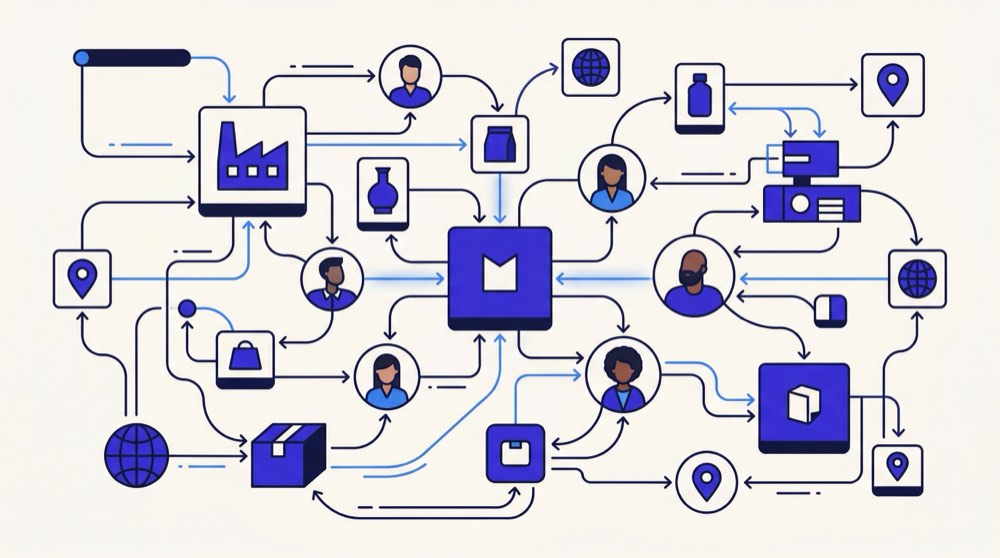
A knowledge graph is a structured database of entities (people, organizations, concepts) and the relationships between them. Google\'s Knowledge Graph, Wikidata, and similar systems are the factual backbone AI models reference when verifying brands. Brands with knowledge graph presence get cited more because AI models can verify their identity and relationships.
Knowledge Graphs: The Factual Backbone of AI Search
A knowledge graph is a structured database that represents real-world entities — people, organizations, places, products, concepts — and the relationships between them. Google\'s Knowledge Graph, launched in 2012, contains billions of these entities and powers the Knowledge Panels you see in search results. Wikidata, the structured data backbone of Wikipedia, is another major knowledge graph.
For brands, knowledge graph presence means your entity is verified — search engines and AI models recognize you as a distinct, real entity with defined attributes and relationships. This verification is the foundation of entity authority.
How AI Models Use Knowledge Graphs
AI models interact with knowledge graphs at three stages:
1. Entity identification. When a user asks about a brand, AI models check knowledge graphs to verify the entity exists and retrieve its basic attributes (what it is, what it does, who founded it). This is the identity verification step.
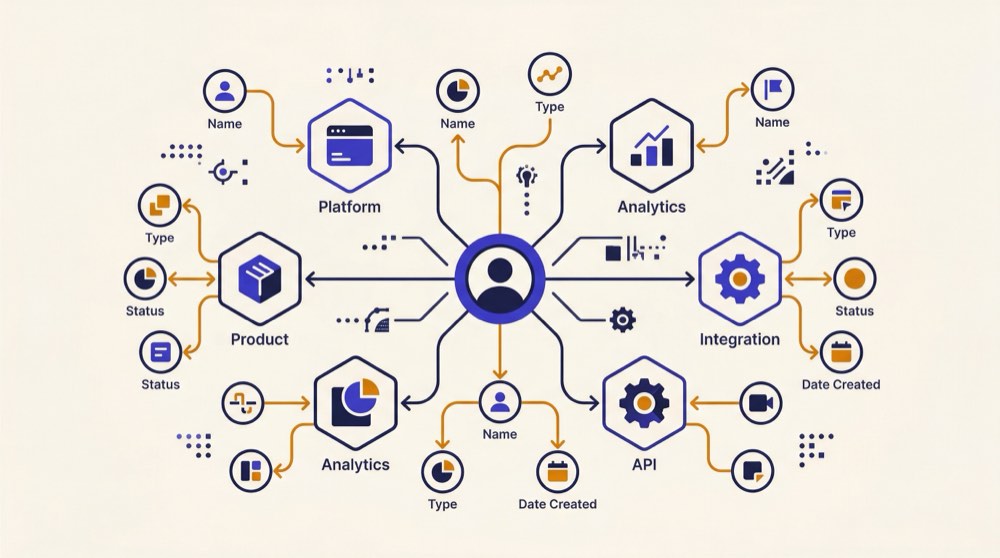
2. Relationship mapping. Knowledge graphs define connections: "Joel House → founded → Outrigger → category → AI SEO platform." These relationships help AI models understand context and make appropriate recommendations.
3. Fact checking. When AI models generate responses, they cross-reference claims against knowledge graph data. If your website says you were founded in 2024 but Wikidata says 2023, the inconsistency reduces citation confidence.
| Knowledge Graph | Primary Use | AI Impact |
|---|---|---|
| Google Knowledge Graph | Powers Knowledge Panels, entity verification | Highest — directly feeds Google\'s AI systems |
| Wikidata | Structured data for Wikipedia, open data | Very high — referenced by multiple AI models |
| Crunchbase | Company and funding data | High for tech/startup entities |
| LinkedIn Graph | Professional relationships | High for B2B entity verification |
| DBpedia | Academic/structured Wikipedia data | Medium — used in research and some AI systems |
The practical implication: brands that exist in knowledge graphs have a verified identity that AI models trust. Brands absent from knowledge graphs must rely solely on content and mention signals — a weaker position for earning AI citations.
For the complete strategy on building knowledge graph presence, see the entity SEO guide and the Wikipedia/Wikidata strategy. The entity SEO technical guide covers the structured data implementation that connects your website to knowledge graph entities.
How to Get Your Brand Into Knowledge Graphs
Knowledge graph presence is earned through a combination of structured signals and external validation.
Wikidata (most accessible): Any notable entity can have a Wikidata entry. Create an entry with your brand\'s key attributes: name, description, official website, founding date, founders, headquarters, industry. Wikidata entries require references — link to press articles, official registration records, or other verifiable sources.
Google Knowledge Panel (triggered by signals): Google Knowledge Panels appear automatically when Google\'s systems have enough entity signals. Key triggers: Wikidata entry, Wikipedia article, comprehensive Organization schema on your website, consistent information across authoritative platforms, and sufficient search volume for your brand name.
Wikipedia (highest impact, highest bar): Wikipedia requires demonstrable notability — significant coverage in reliable, independent sources. This means press coverage, industry recognition, awards, or other third-party evidence that your brand warrants an encyclopedia entry. You cannot write your own Wikipedia article (conflict of interest). Focus on earning the press coverage and third-party recognition that makes a Wikipedia article defensible.
The 6-pillar audit assesses knowledge graph presence as part of the entity pillar. Outrigger tracks whether AI models reference your knowledge graph data when mentioning your brand.
Not sure whether your brand has the knowledge graph presence AI models look for? Run a free AI Visibility Audit — it takes about 20 minutes and the results, including your entity verification gaps, land in your inbox.
Frequently Asked Questions
Does every brand need to be in a knowledge graph?
Not every brand can achieve Wikipedia-level knowledge graph presence, and that is fine. The minimum viable entity SEO involves Wikidata entry, comprehensive structured data on your website, and consistent profiles across major platforms. These signals give AI models enough entity data to verify your brand. Full knowledge graph inclusion (Wikipedia, Knowledge Panel) amplifies the effect but is not a prerequisite for AI citations.
How is a knowledge graph different from a database?
A traditional database stores data in tables with fixed schemas. A knowledge graph stores data as entities and relationships in a flexible graph structure — "Joel House founded Outrigger" and "Outrigger is an AI SEO platform" are relationship statements. This graph structure allows AI models to traverse connections and understand context in ways that tabular databases cannot.
Can I create my own knowledge graph?
You cannot add your brand to Google\'s Knowledge Graph directly — Google builds it automatically from web signals. You can create a Wikidata entry and implement structured data on your website, which feeds into knowledge graph systems. The structured data on your site (Organization, Person, Product schema) is essentially your brand\'s contribution to the knowledge graph ecosystem.
AI audits are currently invite-only
Outrigger is in an invite-only pilot. Existing invited users can sign in for audit access; public access is not open.
Analyze your brandRelated Articles

Entity SEO: How to Make Google and AI Models Understand Your Brand

What Is Entity Authority? Why AI Models Trust Some Brands More
Entity SEO for AI: How to Build a Knowledge Graph That AI Models Trust
Wikipedia and Wikidata Strategy for AI Visibility: The Entity Authority Playbook