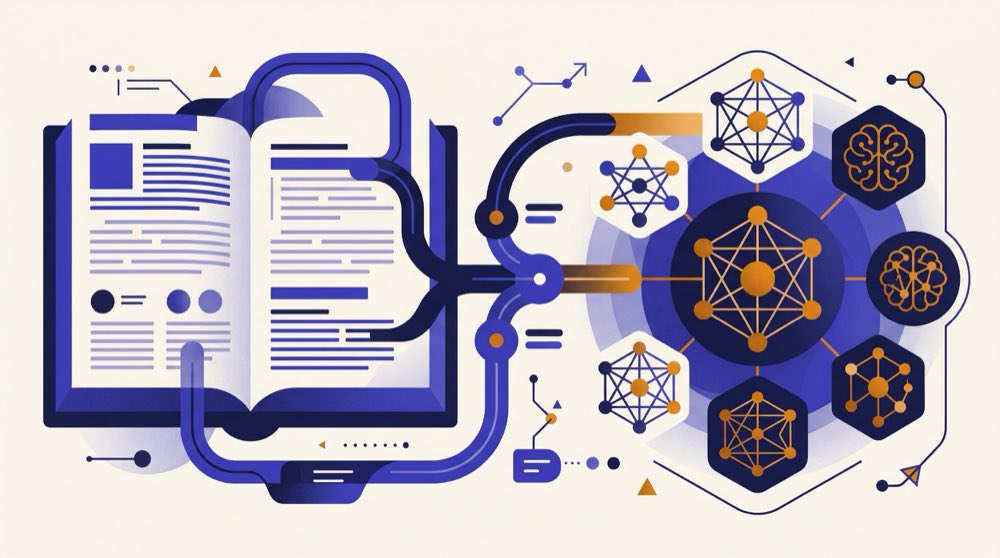
Entity SEO: How to Make Google and AI Models Understand Your Brand
The definitive guide to entity SEO — the practice of building a clear, consistent, machine-readable identity for your brand across the web. Covers knowledge graph optimization, structured data implementation, cross-platform consistency, and the specific entity signals AI models use for citation decisions.

Entity SEO is the practice of building a clear, consistent, machine-readable brand identity that search engines and AI models can confidently reference. It encompasses knowledge graph presence, structured data, cross-platform consistency, and entity relationship mapping. Brands with strong entity SEO foundations get cited by AI models at significantly higher rates because AI systems trust brands they can verify.
Entity SEO: Making Your Brand Machine-Readable
Entity SEO is the practice of ensuring that search engines and AI models understand your brand as a distinct, verified entity — not just a keyword match. When Google and AI models can confidently identify who you are, what you do, and where you fit in your industry\'s landscape, they cite you with higher confidence.
Entity authority — the trust level your brand holds in knowledge systems — is built through three pillars: identity (who you are), relationships (how you connect to your industry), and validation (what others say about you). This guide covers all three and the technical implementation that makes them machine-readable.
The 6-pillar AI visibility audit measures entity strength as one of the six core pillars (AI Presence, Entities, Reviews, On-Page, Citations, and Press). For brands that score below 50 on the entity pillar, entity SEO optimization typically delivers the fastest improvement in AI citation confidence.
Knowledge Graph Fundamentals
The knowledge graph is the structured database of entities and relationships that search engines and AI models use to understand the world. Google\'s Knowledge Graph contains billions of entities — people, organizations, places, concepts — and the relationships between them.
Why knowledge graph presence matters: Wikipedia accounts for 47.9% of ChatGPT\'s top-10 citations. This is not because Wikipedia has the best content — it is because Wikipedia is the largest structured knowledge base that AI models reference for entity verification. Brands with knowledge graph presence (Wikipedia, Wikidata, Google Knowledge Panel) have a verified entity identity that AI models trust.
Knowledge graph entry points:
| Source | How to Get In | Impact |
|---|---|---|
| Wikidata | Create an entry if your brand meets notability criteria | Foundation for all knowledge graph signals |
| Wikipedia | Requires third-party notability (press, awards, industry recognition) | Highest single entity authority signal |
| Google Knowledge Panel | Triggered automatically by strong entity signals | Visible proof of Google entity recognition |
| Crunchbase | Self-service profile creation for companies | Strong for tech/startup entities |
| LinkedIn Company | Self-service profile creation | Broad professional entity signal |
| Google Business Profile | Self-service for businesses with physical/service locations | Local entity authority |
The entity verification chain: AI models verify entities by cross-referencing multiple sources. When your brand appears consistently across Wikidata, your website\'s Organization schema, LinkedIn, Crunchbase, and Google Business Profile — all with matching information — the entity is verified. Inconsistencies at any point weaken the chain.
Structured Data: The Technical Foundation of Entity SEO
Structured data is the technical implementation that makes your entity identity machine-readable. Content with schema has a 2.5x higher chance of AI citation — and that advantage compounds when schema is comprehensive and correctly implemented.
The entity SEO schema stack:
1. Organization schema (homepage). Your brand\'s core entity definition: name, description, founding date, location, logo, sameAs links to all official profiles, and knowsAbout for expertise areas.
2. Person schema (author/team pages). Key people associated with your brand: name, job title, worksFor referencing the Organization, sameAs links to professional profiles, knowsAbout for expertise areas. This connects personal E-E-A-T signals to your organization.
3. Article schema (every content page). References the author\'s Person entity and the publisher\'s Organization entity. Creates a content-to-entity chain that AI models follow.
4. FAQPage schema (every page with Q&A content). Labels question-answer pairs for direct extraction in AI Overviews.
5. Product/Service schema (product pages). Defines your offerings with structured properties: name, description, pricing, features. Helps AI models understand what your brand actually sells.
6. Review/AggregateRating schema (where applicable). Surfaces review data in structured format. AI models reference review schema for trust evaluation.
The JSON-LD schema recipes provide copy-paste templates for each schema type. The structured data audit checklist covers the verification process for existing implementations.
Cross-Platform Entity Consistency
Entity SEO extends beyond your website to every platform where your brand appears. The consistency of your identity across platforms is a direct trust signal for AI models.
The consistency audit:
For each platform your brand appears on, verify: - Name: Exact same format everywhere ("Outrigger" not "Outrigger" or "outrigger-ai") - Description: Same core positioning statement adapted to each platform\'s format - Category: Same business category across directories and profiles - Contact information: Same address, phone, email, website URL - Founding information: Same year, location, founders - Logo: Same current logo across all platforms
Common consistency failures: - LinkedIn says "AI marketing platform" while Google Business says "SEO services" - Website says founded 2023, Crunchbase says 2022 - Old logo on some platforms, new logo on others - Different phone numbers or addresses across directories
The sameAs connection:
Organization schema includes a sameAs property that lists all your official platform URLs. This explicitly tells machines: "These are all the same entity." Include every official profile URL in your sameAs array:
"sameAs": [
  "https://www.linkedin.com/company/outriggerai",
  "https://www.instagram.com/outriggerai"
]
Entity Relationships: Connecting Your Brand to Its Ecosystem
Beyond establishing your own entity, entity SEO involves defining your relationships to other entities — the industry you operate in, the category you belong to, the people associated with you, and the products you offer.
Key entity relationships to establish:
Person → Organization: Your CEO and key team members should have Person schema with worksFor referencing your Organization entity. This connects personal authority to brand authority.
Organization → Industry: Your Organization schema should include knowsAbout properties that define your expertise areas. This helps AI models categorize your brand correctly.
Product → Organization: Product/Service schema should reference your Organization as the manufacturer or provider. This connects product queries to your brand entity.
Organization → Organization: If you are part of a parent company or have subsidiaries, establish these relationships in structured data. Brand mentions of the parent company indirectly strengthen subsidiary entity authority.
The entity relationship web: Every entity relationship you establish adds a connection that AI models can traverse. When a user asks about your product category, AI models that can trace the path from category → your product → your organization → your team\'s expertise → third-party validation have higher confidence in citing your brand.
The entity SEO technical guide covers advanced implementation including sameAs, knowsAbout, worksFor, and relationship mapping. The Wikipedia and Wikidata strategy covers how to establish entity relationships within the knowledge graph itself.
Outrigger\'s entity audit maps your current entity relationships and identifies missing connections that would strengthen AI citation confidence. The audit produces a specific entity graph visualization showing how your brand connects to its ecosystem.
The Entity SEO Action Plan
Entity SEO improvements follow a clear priority order:
Priority 1: Fix consistency issues (Week 1)
- Audit all platform profiles for name, description, category, and contact consistency
- Update any inconsistent information to match your canonical entity definition
- Verify sameAs links in Organization schema include all official profile URLs
Priority 2: Implement core schema (Week 1-2) - Organization schema on homepage - Person schema for CEO/founder and key team members - Article schema referencing Person and Organization on all content pages - FAQPage schema on all pages with Q&A content
Priority 3: Establish platform presence (Week 2-4) - Claim and optimize profiles on all relevant directories - Create Wikidata entry if brand meets notability criteria - Optimize Google Business Profile if applicable
Priority 4: Build entity relationships (Week 3-6)
- Connect Person entities to Organization via worksFor
- Add knowsAbout properties to both Person and Organization schema
- Create content that explicitly defines relationships ("about" pages, team pages)
Priority 5: Pursue knowledge graph inclusion (Ongoing) - Build earned media trail for Wikipedia notability - Create comprehensive reference content that knowledge graph editors can cite - Monitor Google Knowledge Panel appearance
| Priority | Action | Timeline | Impact on AI Citations |
|---|---|---|---|
| 1 | Fix entity consistency | Week 1 | Immediate trust improvement |
| 2 | Implement core schema | Week 1-2 | 2.5x citation advantage |
| 3 | Platform presence | Week 2-4 | Broadened entity recognition |
| 4 | Entity relationships | Week 3-6 | Strengthened citation confidence |
| 5 | Knowledge graph | Ongoing | Highest long-term authority |
Not sure where your entity signals stand today? The free AI Visibility Audit scores your Entities pillar — consistency, schema, and knowledge graph presence — alongside AI Presence, Reviews, On-Page, Citations, and Press, and emails the full report in several minutes so you know exactly which entity fixes to tackle first.
Frequently Asked Questions
What is the difference between entity SEO and traditional SEO?
Traditional SEO optimizes pages for keyword matching — helping pages rank for specific search terms. Entity SEO optimizes your brand\'s identity for machine understanding — helping search engines and AI models recognize, trust, and confidently cite your brand as a verified entity. Traditional SEO asks "does this page match the query?" Entity SEO asks "does this brand have a verified, trustworthy identity?" Both are necessary; entity SEO is increasingly important as AI search grows.
How do I know if Google recognizes my brand as an entity?
Search your brand name on Google. If a Knowledge Panel appears on the right side of the results, Google recognizes your brand as a distinct entity. If no Knowledge Panel appears, your entity signals are insufficient. Other indicators: your brand appearing in Google autocomplete, your Wikipedia article ranking, and structured data appearing in rich results. The 6-pillar audit includes entity recognition assessment.
Can small or new brands do entity SEO?
Yes. Entity SEO starts with what you control: consistent profiles across platforms, comprehensive structured data on your website, and clear entity relationships between your brand, team, and products. Knowledge graph inclusion (Wikipedia, Knowledge Panel) requires more external validation, but the foundational entity signals — consistency, schema, platform presence — can be built by any brand regardless of size or age.
How does entity SEO interact with content SEO?
They are complementary. Content SEO builds topical authority through comprehensive content coverage. Entity SEO ensures the brand behind that content is recognized as a verified entity. A brand with strong content but weak entity signals may rank on Google but underperform in AI citations. A brand with strong entity signals but thin content has a verified identity but nothing for AI models to cite. The strongest AI visibility comes from both: deep content within verified entity context.
How long does entity SEO take to impact AI citations?
Start with profile consistency fixes and schema implementation and compare your Entities pillar score at Day 30 against your Day 0 baseline as search engines re-crawl updated pages. Evaluate cross-platform directory indexing at Day 60, and review knowledge graph signals (Wikidata, Wikipedia eligibility, Knowledge Panel status) at Day 90 and quarterly checkpoints against your Day 0 baseline.
Review Your AI Visibility Baseline
The free quick audit covers three core signal groups: Citations, AI Presence, and On-Page foundations. Review available findings and recommendations supported by the evidence the audit could verify.
Analyze your brandRelated Articles

What Is Entity Authority? Why AI Models Trust Some Brands More
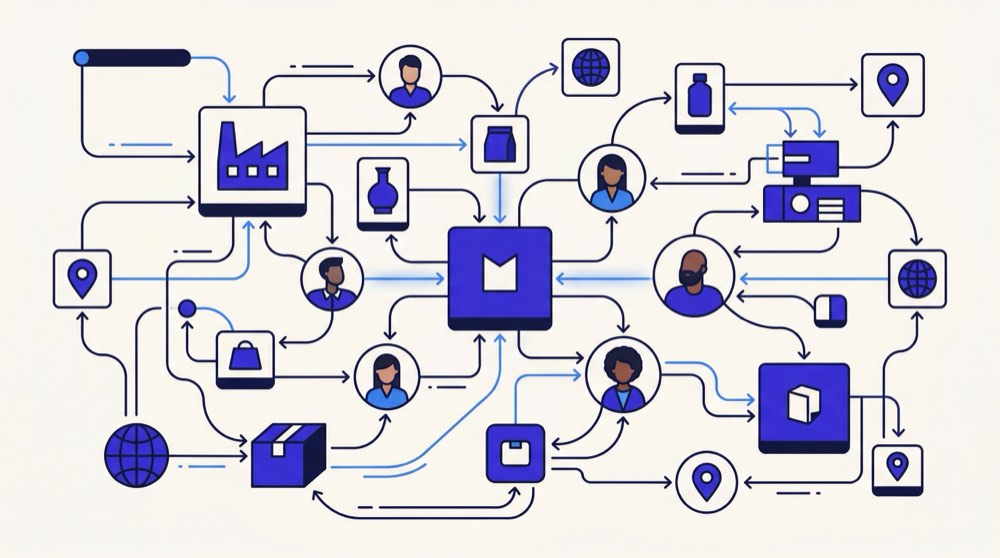
What Is a Knowledge Graph? Why It Powers AI Recommendations
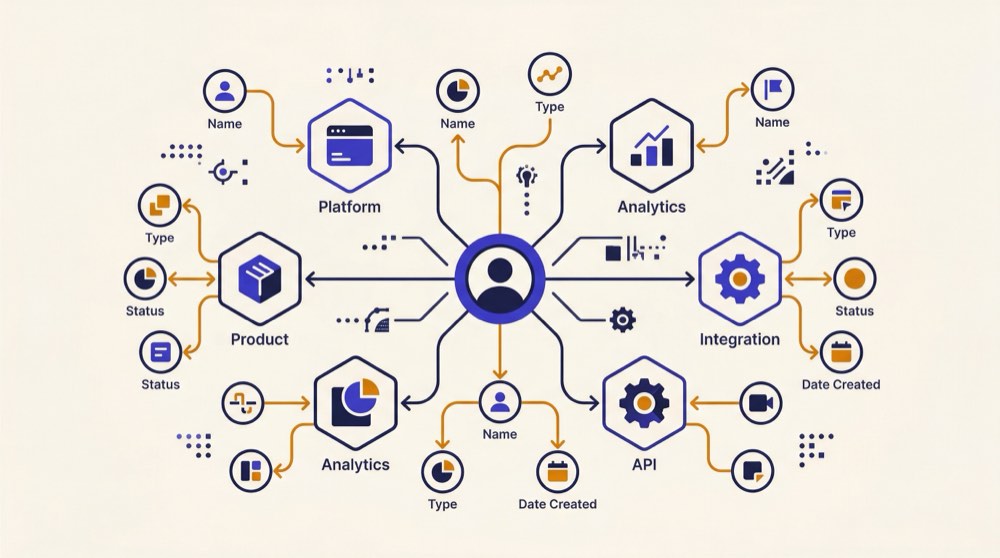
Entity SEO for AI: How to Build a Knowledge Graph That AI Models Trust

Schema Markup for AI Search: What Actually Gets You Cited in 2026