Gemini SEO: How to Get Your Brand Into Google Gemini
Gemini answers questions using the Google index and Google's entity graph. This guide explains how Gemini sources its answers and the concrete steps to improve your brand's presence inside Google's flagship AI model.

Gemini SEO means making your brand legible to Google's entity graph and retrievable from the Google index. Gemini grounds answers in Google Search results and cross-references Google's Knowledge Graph to verify who you are, so presence depends on two things: a well-defined, consistent brand entity that Google recognizes, and passage-level content that ranks and answers real questions. Fix your entity signals first (Knowledge Panel, Wikidata, consistent identity across the web), then publish structured, quotable content for the questions your buyers ask.
How Gemini Sources Its Answers
Gemini is unique among major AI models because it sits inside the company that owns the world's largest search index and the most developed entity graph. It uses both. When Gemini answers a factual or recommendation-style question, it typically grounds the response in live Google Search results — a mechanism Google documents — and its behavior is consistent with cross-referencing Google's Knowledge Graph to confirm the identities of the brands, people, and products involved.
That dual mechanism is the whole game. Retrieval decides which pages and passages inform the answer. Entity grounding decides whether Google is confident enough about your brand to name it. A page can rank well and still get skipped if Gemini cannot resolve your brand to a trusted entity — and a well-understood entity can get recommended even when your own pages are thin, because Google already knows what you are and who you serve.
A common mistake is optimizing for Gemini as if it were just ChatGPT with a Google logo. It is not. Gemini has a memory of the web the others lack — the Knowledge Graph. If Google has resolved your brand into a clean entity with a category, a location, a founder, and consistent facts across the web, Gemini can surface you with confidence. If your brand is a fuzzy blob Google cannot pin down, no amount of content will make Gemini recommend you. Entity first, content second.
This makes Gemini SEO more entity-centric than any other AI platform. The same entity optimization work that helps Google understand your brand directly feeds Gemini's confidence.
Why the Entity Graph Is the Center of Gemini SEO
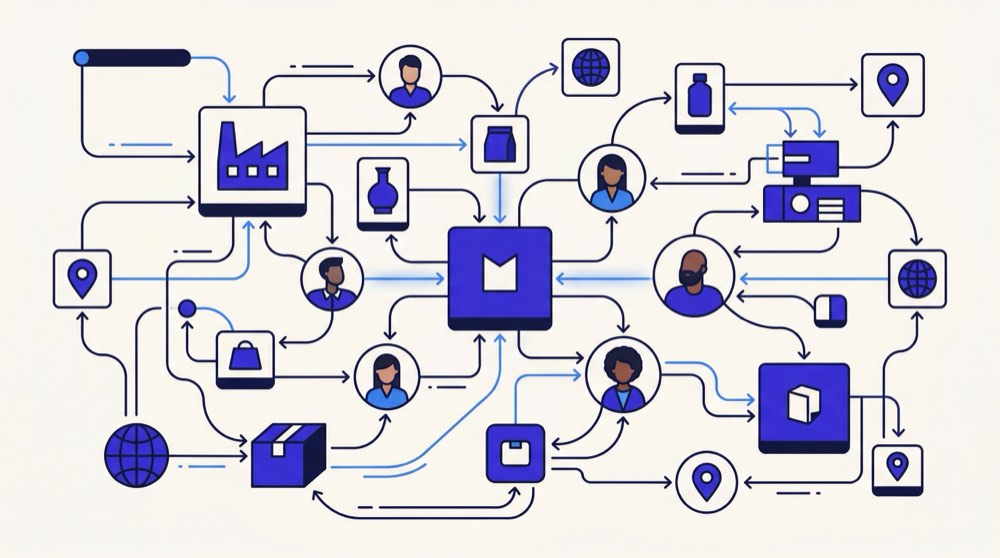
Google's Knowledge Graph is a database of entities — brands, people, places, products — and the verified relationships between them. When your brand exists in it as a clean node, Gemini can answer "who is X and are they any good" without guessing. When it does not, Gemini either omits you or hedges.
Google builds an entity for your brand by triangulating signals from across the web:
- Your own site's structured data (Organization schema with name, url, logo, sameAs, founding date, contact points)
- Wikidata and Wikipedia, which Google ingests directly into the Knowledge Graph
- Authoritative directories and databases relevant to your vertical
- Consistent name, address, and phone (NAP) across every listing
- Third-party mentions that describe your brand the same way you do
Directory presence and entity consistency are among the strongest raw predictors of AI visibility in a 2026 study from Outrigger (the Outrigger Visibility Index, 1,004 businesses across 5 AI models). The mechanism is exactly this: entity clarity is what lets a grounding model trust and name you.
A Google Knowledge Panel is the visible proof that Google has built an entity for you. If you have one, Gemini has a high-confidence node to draw from. If you do not, building one — through Wikidata, structured data, and corroborating references — is usually the highest-leverage Gemini SEO move you can make.
A quick way to audit your current entity state is to search Google for your exact brand name and read the results the way a machine would. Does a Knowledge Panel appear? Do the top results agree on what you do, where you are based, and when you were founded? Is there a directory or database listing that contradicts your own site? Anything that would confuse a careful stranger is confusing Google's systems too, and every contradiction you resolve is a direct input into how confidently Gemini can talk about you.
The best available explanation for why this beats pure content volume is confidence. Grounded models behave as if they ask a second question when a retrieved passage recommends a brand: do I actually know who this is? When the answer is a clean Knowledge Graph node with a matching category, Gemini tends to repeat the recommendation with conviction; when the answer is uncertainty, it tends to downgrade or drop the mention rather than state something it cannot verify. Every entity signal you add — a sourced Wikidata claim, a consistent founding date, a matching category on three directories — feeds that verification. This is why two brands with similar content quality can get wildly different Gemini treatment: the one Google understands as an entity gets named, and the one it does not stays invisible.
8 Steps to Improve Your Presence in Gemini
Sequence matters: entity work first, content second, corroboration throughout.
- Publish complete Organization schema. Include
name,url,logo,sameAs(linking every official profile),foundingDate, andcontactPoint. This is the anchor Google uses to resolve your entity. - Create or clean up your Wikidata item. Google ingests Wikidata into the Knowledge Graph. A well-sourced Wikidata entry with your category, location, founder, and official site is one of the most direct paths into the entity graph.
- Enforce NAP and description consistency everywhere. Your business category, founding year, and one-line description must match across your site, Google Business Profile, LinkedIn, directories, and any database that lists you. Conflicting facts make Google less confident, and a less-confident Google means a quieter Gemini.
- Claim and complete your Google Business Profile (for local and service businesses). It feeds the entity directly, and its category, service area, and attributes are among the cleanest signals Google has about what your brand actually does.
- Earn presence in the directories that matter for your vertical. Industry databases and reputable directories are entity corroboration Google reads.
- Write passage-first content for real questions. Gemini still retrieves from the index, so the same passage-level structure that wins Google AI Mode wins here: question-shaped headings, a direct answer block beneath each, evidence, and named examples.
- Build topical depth around your category. A cluster of related, interlinked pages signals to Google that your brand is an authority in a defined space — which sharpens how the entity is categorized.
- Accumulate third-party mentions that describe you consistently. Reviews, articles, and citations that echo your positioning create the consensus Gemini needs to move from mentioning you to recommending you.
Two failure modes account for most stalled Gemini campaigns. The first is publishing content before the entity foundation exists: the pages rank, the passages are clean, and Gemini still declines to name the brand because Google cannot resolve who is speaking. The second is fixing the entity once and letting it drift — a rebrand, an office move, or a category pivot quietly reintroduces the conflicting facts you worked to eliminate. Treat entity consistency as maintenance, not a one-off project: whenever a core fact about the business changes, propagate it to your schema, your profiles, and your directory listings in the same week.
Outrigger monitors whether Gemini names your brand for your priority questions and tracks the entity signals feeding it, so you can prioritize the fix with the most impact.
Gemini vs Other AI Models: What Changes
The core GEO principles hold across every engine, but the weighting differs. Here is where Gemini diverges from its peers.
| Factor | Gemini | ChatGPT / Perplexity |
|---|---|---|
| Primary index | Google index | Bing index (ChatGPT); own crawl + web (Perplexity) |
| Entity grounding | Google Knowledge Graph (heavy) | Lighter, model-internal knowledge |
| Freshness | Live Google results | Live web, varies by product |
| Biggest lever | Entity clarity + Knowledge Panel | Passage citability + third-party mentions |
| Where a fuzzy brand fails | Omitted despite ranking pages | Sometimes named from training data anyway |
The strategic implication: if you have limited time, spend it on entity work for Gemini and passage structure for the others — but note that entity work pays off everywhere. A clean Knowledge Graph node helps Gemini most, yet it also raises the confidence with which ChatGPT cites you and how Perplexity ranks your source.
The table also explains a pattern that puzzles many teams: a brand that performs well in ChatGPT but poorly in Gemini, or the reverse. ChatGPT can name a brand it absorbed during training even when live evidence is thin, so a company with years of broad web presence may surface there while remaining invisible to Gemini's stricter entity checks. Meanwhile a local business with an immaculate Google Business Profile and a clean Knowledge Panel can be recommended by Gemini while barely registering elsewhere. Neither result is random — each engine reflects the signals it weighs most, which is why reading your results engine by engine tells you far more than an aggregate score. The gap itself is the diagnosis.
Because Gemini is embedded across Google's ecosystem and Android, the audience it reaches is enormous. "Gemini rewards the least glamorous work in GEO," Joel House argues. "Nobody wants to spend a week on Wikidata and schema and NAP consistency. But that unglamorous entity foundation is exactly what turns Gemini from ignoring your brand into recommending it — and it is the one asset your competitors are usually too impatient to build." The full sequencing across engines lives in the platform-by-platform GEO guide.
Measuring Gemini Visibility
Gemini presence is measurable if you treat it as a recurring test rather than a one-time check. Because Gemini's answers depend on live retrieval and an evolving entity graph, a single query tells you little; the trend tells you everything.
What to track monthly: - Whether Gemini names your brand for a fixed set of buyer questions - Whether it recommends you or merely lists you among options - Which sources it cites when it does surface you - The state of your entity signals: Knowledge Panel presence, Wikidata completeness, NAP consistency, review velocity - Competitor share of Gemini answers for the same questions
Run the same question set each month and watch the movement. When you close an entity gap — publishing a Wikidata item, fixing conflicting founding dates, adding Organization schema — you will typically see Gemini's confidence rise over the following weeks as Google reprocesses the signals. The lag is real: entity changes propagate on Google's reprocessing schedule, not instantly, so patience is part of the method. A brand that fixes its NAP inconsistencies in week one may not see Gemini's behavior shift until week four or five. Judge the work by the trend across a quarter, not by next Tuesday's answer.
One practical tip: keep a simple log of what you changed and when, alongside the monthly citation checks. When Gemini starts naming you for a question it previously ignored, you can trace it back to the specific entity fix that moved the needle — and then repeat that fix across your other properties or clients. Over time this log becomes your own private evidence of which entity signals Gemini actually rewards in your vertical, which is far more valuable than any generic checklist. Share it with whoever writes your content, too — entity fixes and content briefs drift apart quickly when the two tracks cannot see each other's work, and the strongest Gemini results come from running both against the same list of priority questions.
Remember why this is worth doing. A brand that is effectively invisible in AI search loses the recommendation entirely, and 65.9% of businesses are in exactly that position according to a 2026 study from Outrigger. Getting into Gemini — embedded across Search, Android, and Workspace — puts your brand in front of enormous, high-intent demand.
A free AI visibility audit shows whether Google has resolved your brand into a clean entity and whether Gemini currently recommends you, so you know exactly which foundation to build first.
Frequently Asked Questions
What is Gemini SEO?
Gemini SEO is the practice of making your brand legible to Google's entity graph and retrievable from the Google index so that Google Gemini names and recommends you in its answers. It combines entity optimization (Knowledge Panel, Wikidata, consistent identity signals) with passage-level content that ranks and directly answers buyer questions.
How does Gemini decide which brands to recommend?
Gemini grounds answers in live Google Search results and cross-references Google's Knowledge Graph to verify identities. It recommends brands it can resolve to a trusted entity with a clear category, consistent facts, and corroborating third-party signals. A fuzzy brand Google cannot pin down gets omitted even if its pages rank.
Do I need a Wikipedia or Wikidata entry to appear in Gemini?
Not strictly, but a well-sourced Wikidata item is one of the most direct paths into Google's Knowledge Graph, which Gemini leans on heavily. If you cannot meet Wikipedia notability standards, you can still build entity clarity through Organization schema, a complete Google Business Profile, consistent NAP, and reputable directory listings.
Is Gemini SEO different from ranking in Google Search?
It overlaps but is not identical. You still need Google to index and rank your pages, because Gemini retrieves from that index. The added layer is entity grounding: Gemini also checks whether Google understands your brand as a trusted entity. Strong rankings without entity clarity often produce pages that inform an answer without your brand being named.
AI audits are currently invite-only
Outrigger is in an invite-only pilot. Existing invited users can sign in for audit access; public access is not open.
Pilot accessRelated Articles
Entity SEO for AI: How to Build a Knowledge Graph That AI Models Trust
Platform-by-Platform GEO: How to Optimize for ChatGPT vs Perplexity vs Gemini vs Claude
How to Rank in Google AI Mode
What Is a Knowledge Graph? Why It Powers AI Recommendations