How to Rank in Google AI Mode
Google AI Mode is a conversational, multi-step search experience that answers directly instead of returning ten blue links. This guide explains how AI Mode selects sources and the concrete steps to get your brand cited inside its answers.

To rank in Google AI Mode, you need pages that a query-fan-out system can retrieve and quote in fragments. AI Mode breaks each question into multiple sub-queries, pulls passages from the Google index that answer each one, and synthesizes a conversational response with linked sources. Win by publishing passage-level answers to specific sub-questions, keeping strong classic rankings for the underlying queries, reinforcing entity signals so Google trusts your brand, and structuring pages so any 40-80 word chunk stands alone as a citable answer.
AI Mode vs AI Overviews: What You Are Actually Optimizing For
Google runs two different AI surfaces, and they behave differently. AI Overviews are the summary boxes that appear above traditional results for a single query — they read the top-ranking pages and generate a synopsis with a few source links. AI Mode is a separate, fully conversational experience: you ask a question, Google answers directly, and you can keep asking follow-ups in the same thread without ever seeing a classic results page.
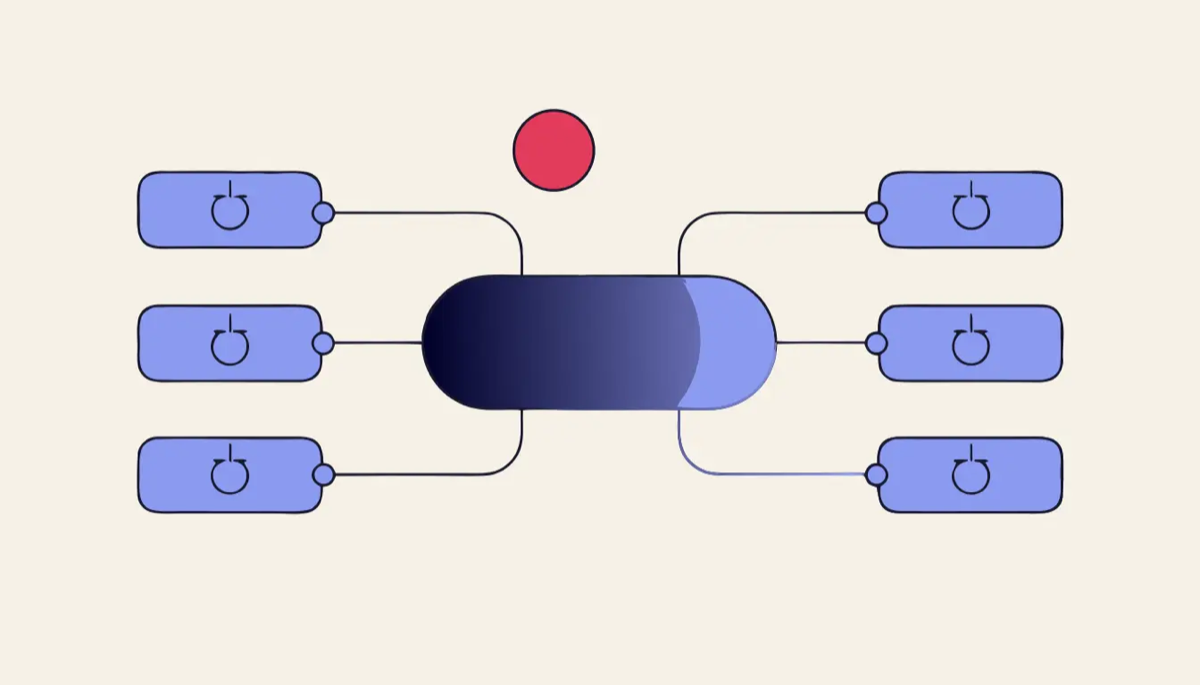
The mechanical difference matters. AI Overviews mostly draw from pages already ranking on page one for that exact query. AI Mode uses a technique Google calls query fan-out: it silently decomposes your question into several related sub-queries, runs each against the index, retrieves passages from the best sources for each sub-query, and stitches them into one answer. That means a page that never ranks #1 for the head term can still get cited in AI Mode — if it answers one of the sub-questions better than anyone else.
Joel House, founder of Outrigger and author of AI for Revenue, puts it this way: "AI Mode is where the old SEO game and the new GEO game finally merge. You still need Google to index and trust your page — that has not changed. But ranking #1 is no longer the finish line. The finish line is being the passage Google pulls for one of the five sub-questions it invented on the fly. Brands that write in tight, self-contained answer blocks get harvested for those sub-queries constantly. Brands that bury the answer in paragraph nine never do."
This is why AI Overviews already reshaped click behavior long before AI Mode scaled. The same forces that collapsed organic click-through rates are amplified in AI Mode, where there is no list of links to scroll at all — only the answer and its citations.
How AI Mode Selects and Cites Sources
Based on Google's own descriptions of AI Mode and what practitioners observe in its answers, source selection runs in stages. Understanding each stage tells you where to intervene.
- Query decomposition (fan-out). Your question becomes 3-10 sub-queries. "What is the best CRM for a small law firm?" might fan out to "CRM features for law firms," "CRM pricing for solo attorneys," "legal CRM data security," and "CRM integrations with case management." Each sub-query is a separate retrieval job.
- Passage retrieval. For each sub-query, Google retrieves candidate passages from indexed pages. This uses the same index and much of the same ranking machinery as classic search, so pages must be crawlable, indexed, and reasonably competitive for the underlying terms.
- Grounding and synthesis. A Gemini model reads the retrieved passages and drafts an answer grounded in them. It prefers passages that directly and completely answer a sub-query in a compact span of text.
- Citation attachment. Sources that materially contributed to the answer get linked. A page can influence the answer without being cited, but pages that provide the clearest quotable passage are the ones that earn the visible link.
The practical takeaway: AI Mode rewards passage-level answers, not just page-level authority. A 2,000-word guide that answers one sub-question in a clean 60-word block will beat a thin page that is nominally "about" the topic but never states the answer plainly. For the full cross-engine picture of how retrieval-based systems choose whom to quote, see the platform-by-platform GEO breakdown.
One more consequence of grounding deserves attention: AI Mode strongly prefers to say things it can support with a retrieved passage. That means it under-recommends brands it cannot find clean evidence for, even when they are objectively good options. If your differentiator lives only in your own head or your sales deck — never written plainly on an indexed page — AI Mode has no passage to ground a recommendation on, so it recommends the competitor who did write it down. Getting into AI Mode is often less about being the best option and more about being the best-documented option for each sub-question.
7 Steps to Get Your Brand Into AI Mode Answers
Work these in order. The first three are foundational; the rest compound.
- Keep (or build) classic rankings for your core queries. AI Mode retrieves from the Google index. If you do not rank in the top 10-20 for the underlying terms, your passages rarely enter the candidate set. Traditional technical SEO and topical authority are the entry ticket, not a legacy concern.
- Map the sub-questions, not just the head term. For each priority query, write down the 5-10 sub-questions a fan-out would generate. Create or expand content so each sub-question has a dedicated, clearly-labeled answer on your site.
- Write passage-first. Lead each section with a direct 40-80 word answer to that section's question, then elaborate. Every such block should make sense if lifted out of the page verbatim. This is the single highest-leverage change most sites can make.
- Use a question-shaped structure. H2s phrased as real questions, a short answer immediately beneath, and supporting detail below. FAQ blocks are prime fan-out fodder because each Q/A pair is already a self-contained sub-answer.
- Add structured data. FAQPage, HowTo, Article, and Organization schema help Google parse which passage answers which question and reinforce who you are. It does not force a citation, but it makes your content easier to ground against.
- Strengthen brand entity signals. AI Mode leans on Google's understanding of your brand as an entity. Consistent NAP, an accurate Knowledge Panel, Wikidata presence, and third-party mentions all raise the odds Google trusts you enough to cite. This is the same entity foundation that powers Gemini.
- Earn third-party corroboration. When independent sources say the same thing about your brand, grounding models cite you with higher confidence. Reviews, directory listings, and mentions in authoritative articles create the consensus AI Mode looks for before recommending, not just mentioning.
Outrigger tracks whether your brand appears across these AI surfaces and which passages get pulled, so you can see fan-out coverage instead of guessing.
The Content Structure AI Mode Favors
The pages that get harvested by AI Mode share a recognizable shape. Here is the contrast most teams need to fix.
| Element | Ignored by AI Mode | Favored by AI Mode |
|---|---|---|
| Opening | Brand story, mission statement | Direct answer to the page's core question in the first 2 sentences |
| Headings | Vague labels ("Our Approach") | Real questions users type |
| Answer placement | Buried after context | Immediately under each heading |
| Passage length | Long unbroken paragraphs | Self-contained 40-80 word blocks |
| Evidence | Unsourced claims | Specific numbers, named examples, dates |
| Entity clarity | "We" with no brand grounding | Named brand + consistent identity signals |
Consider a concrete scenario. Suppose a regional accounting firm wants to appear when someone asks AI Mode, "How do I choose an accountant for a startup?" A fan-out would generate sub-queries about credentials, startup-specific tax issues, pricing models, and software compatibility. The firm publishes one guide with an H2 for each sub-question, a crisp answer block beneath each, a comparison table of pricing models, and a named example ("A pre-seed SaaS startup with R&D credits should prioritize..."). Each answer block is now individually retrievable. The firm does not need to outrank giant directories for the head term — it needs to own the cleanest answer to one or two sub-questions.
The shift is to stop writing for the whole query and start writing for the fragments. The brands winning AI Mode are the ones whose pages can be cut into a dozen clean answers, each standing on its own — a structural choice made sentence by sentence, and one entirely within your control. For a deeper treatment of the format, the guide on citable content structure covers the passage-level mechanics.
How to Measure and Improve AI Mode Presence
You cannot improve what you cannot see, and AI Mode presence is invisible in standard analytics. Referral traffic from AI answers shows up thinly and inconsistently in Google Analytics, so measurement has to be intentional.
Track these signals: - Whether your brand appears in AI Mode answers for a fixed set of priority questions, checked on a schedule - Which specific pages and passages get cited when you do appear - Which sub-questions you are missing entirely (the gaps to write next) - Competitor citation share for the same question set - Movement in your brand entity signals (Knowledge Panel, Wikidata, review velocity)
Run a monthly pass: pick 20-30 real questions your buyers ask, query AI Mode for each, and log who gets cited. The questions where a competitor appears and you do not are your roadmap. Note that AI Mode answers vary by user context and evolve quickly, so trend over time matters more than any single snapshot.
A practical way to organize this is a coverage matrix. Down the left, list your priority questions; across the top, the sub-questions each one implies. For every cell, record whether you have a page with a dedicated, passage-level answer — and whether AI Mode currently cites anyone for it. The empty cells where a competitor is cited are your highest-priority content briefs. The empty cells where nobody is cited are open ground you can claim with a single well-structured page. Revisit the matrix quarterly, because fan-out behavior shifts as Google refines the feature, and a sub-question that generated no answers in January can be a live surface by June. Keep the matrix small enough to maintain — twenty questions tracked faithfully beat two hundred tracked once — and assign each empty cell an owner and a due date so the roadmap actually ships.
Treat your own organization's conversations as source material too. Sales calls, support tickets, and onboarding sessions capture the exact phrasing real buyers use, which is far closer to what people type into a conversational engine than the exports from a keyword tool. The teams that show up consistently in AI Mode tend to be the ones that mine those conversations for question phrasing and publish direct answers within days, not quarters.
The payoff justifies the effort. AI referral traffic converts roughly 4.4x better than traditional organic, per a 2026 study from Outrigger, because a user arriving from an AI answer already has intent and pre-qualified trust. A smaller volume of AI-referred visitors can outperform a larger pool of classic clicks.
A free AI visibility audit shows where your brand currently stands across Google AI Mode, Gemini, ChatGPT, and Perplexity — and which sub-questions your competitors already own. From there, the platform-by-platform playbook sequences the work across every engine.
Frequently Asked Questions
Is ranking in AI Mode the same as ranking in AI Overviews?
No. AI Overviews summarize the pages already ranking for a single query and appear above classic results. AI Mode is a separate conversational experience that uses query fan-out to break your question into sub-queries and retrieve passages for each. A page can be cited in AI Mode without ranking #1, as long as it answers one of the sub-questions clearly.
Do I still need traditional SEO to appear in AI Mode?
Yes. AI Mode retrieves from the Google index, so your pages must be crawlable, indexed, and competitive for the underlying terms to enter the candidate set. Traditional technical SEO and topical authority are the entry ticket. The new layer on top is writing self-contained, passage-level answers that a fan-out system can quote for specific sub-questions.
What is query fan-out in Google AI Mode?
Query fan-out is the process where AI Mode silently decomposes your question into several related sub-queries, runs each against the index, and retrieves the best passages for each. The final answer is synthesized from those passages. It is why structuring your content around the sub-questions a query implies is more effective than optimizing for a single head term.
How do I know if my brand appears in AI Mode?
Standard analytics will not tell you reliably, because AI referral traffic is thin and inconsistently attributed. The practical method is to pick a fixed set of 20-30 real buyer questions, query AI Mode for each on a monthly schedule, and log which brands get cited. Purpose-built AI visibility monitoring automates this tracking across engines.
AI audits are currently invite-only
Outrigger is in an invite-only pilot. Existing invited users can sign in for audit access; public access is not open.
Pilot accessRelated Articles

How AI Overviews Killed CTR by 61% (and What to Do About It)
Platform-by-Platform GEO: How to Optimize for ChatGPT vs Perplexity vs Gemini vs Claude

Gemini SEO: How to Get Your Brand Into Google Gemini
ChatGPT Citations: How They Work and How to Earn One